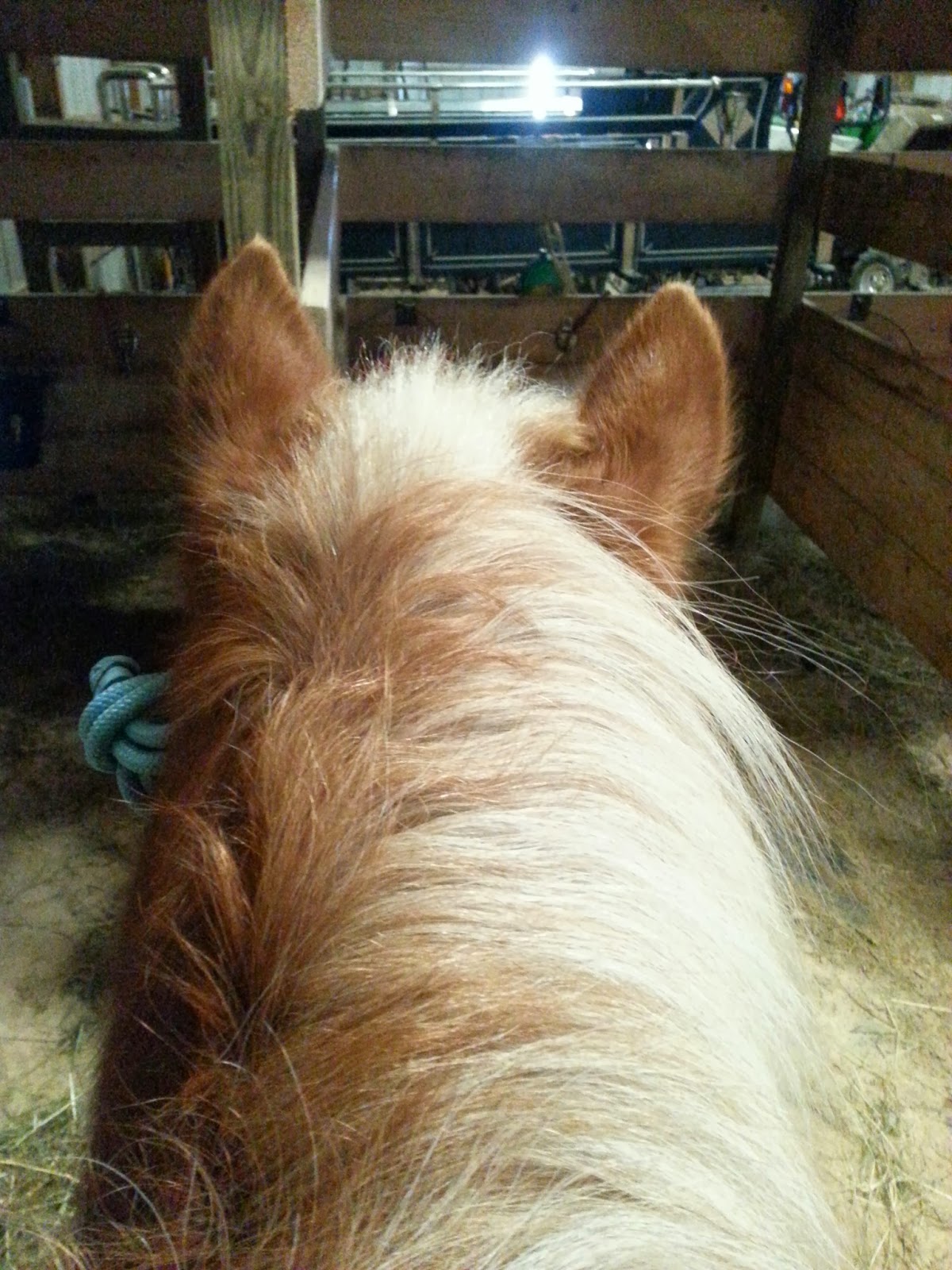
When some one says Haflinger, what is the first thing you think of?
Fat?
Lazy?
Pushy?
Stubborn?
Baby Belgians?
I admit, when I first met Mia, I did not think highly of her. But after my first true interaction with her (one that did not include yelling at her to stop banging on her stall for food), I fell in love. She gave me everything she had, all she wanted was a carrot in return. Or an apple. Or a treat that was given to another horse five stalls down. So, maybe some Haflinger stereotypes are true. . .
Well, I am doing a series of posts that dispel the general stereotype of the Haflinger. The Haflinger is quite possibly the most versatile horse there is and I am in no way biased. . .okay, maybe a little.
The Haflinger can do everything from farm work to eventing. And not only can they do these things, but they can be successful at it. Not very many horses can make that claim. For instance, you will be hard pressed to find a Belgian that can plow land then go on a fox hunt. Or you won't really find a team of Thoroughbreds pulling a carriage through a city. Anything is possible though. . .
So I contacted a bunch of amazing people with Haflingers that do a bunch of different things. I will be presenting them weekly on the blog, in no particular order. I hope it will be fun and enjoyable to read for everyone!
And if you have a Haflinger and would like to be featured, send me an email! I will be glad to write about what you and your Haflinger are up to.
G
For a little history lesson on Haflingers:
- The original sire of the Haflinger horse is the half-Arabcalled 249 Folie, born in 1874. There are seven lines of Haflingers that can be traced back to him: A-line, B-line, M-line, L-line, S-line, ST-line, and W-line. I am having a hell of a time finding information on the mare lines.
- Colts are named with a first letter after the sire, fillies with the first name after the dam. Except in France where foals are named by a letter that is designated for that year and Italy where colts use the letter from the sire and fillies a letter that is designated for the year.
- The Haflingers were selectively bred for their easy-going temperaments and ability to be handled by every member of the family.
- Haflingers first came to America in 1960. Their stud book was closed in in the late 1940's so no new blood could be introduced into their line.
- A Haflinger is a small horse breed. They range from about 13.2 hands to 14.3 hands. Yet. . . they have the biggest personality of all the breeds (in my humble opinion)!
- They are war veterans! The Haflingers fought in World War I and World War II. They were used as pack horses on the front lines. After WWI, the breed was almost wiped out because of the changing borders.
- Haflingers are named from the village of Hafling, Austria, which is where the breed originally started. That area is now part of Italy.
Happy New Year!